Skip to content
What Is a Keffiyeh Scarf? The Complete Guide for Muslim Men
- by mahidur seo
There is a moment — maybe you have felt it — when you put something on and it just feels right. Not just the fit. Not just the colour. The weight of it. The meaning behind it. The way it makes you stand a little taller without trying.
That is the keffiyeh.
It is one of the most recognised pieces of cloth in the world. And yet, most people who see it do not fully understand what it is, where it comes from, or why Muslim men today — in Toronto, in Chicago, in Auckland — are wearing it with pride.
This is that story.
A Piece of Cloth That Carries a World
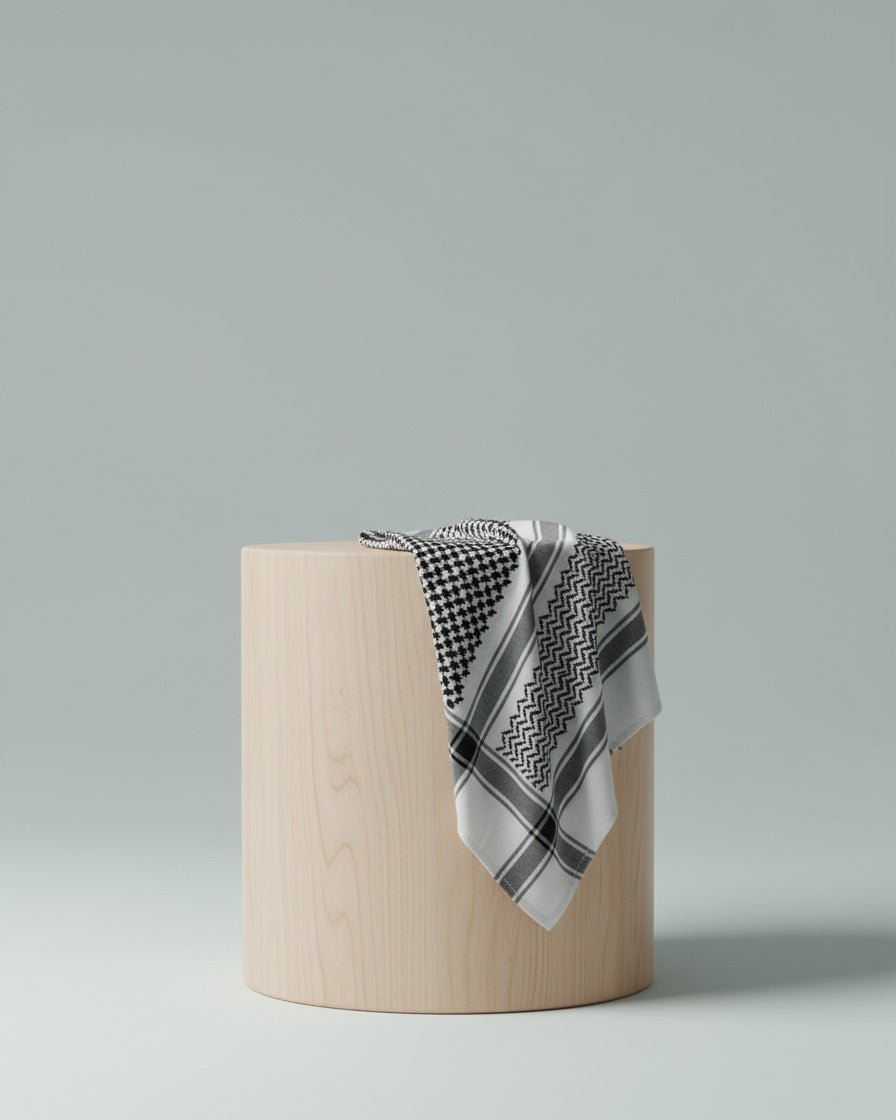
The keffiyeh (also spelled kufiya, kufiyya, or ghutrah depending on region) is a traditional square woven scarf. Usually made from cotton. Usually around 120cm x 120cm — large enough to wrap, drape, fold, or tie in dozens of ways.
Its origins trace back thousands of years across the Arab world. Before cities. Before borders. Before anyone was debating fashion, there were farmers in the Levant, merchants crossing the Arabian Peninsula, and shepherds moving through the Fertile Crescent, all wearing the same simple piece of cloth.
Why? Because it worked.
The keffiyeh protected the head and face from the brutal desert sun. It filtered dust and sand during sandstorms. It kept warmth in cold desert nights. It could be soaked in water and wrapped around the neck during heat. It could signal identity from a distance — which tribe, which region, which family.
It was not fashion. It was survival gear. And like all things built to last, it outlived its original purpose and became something far more powerful.
The Pattern Is Not Decoration — It Is Language
That iconic checkered weave — the black-and-white or red-and-white fishnet pattern — is not random. It is not a logo. It is not a brand. It is a visual language that developed over generations and was woven directly into the fabric.
The traditional Palestinian keffiyeh pattern contains three overlapping symbols:
The fishnet pattern represents the fishing communities along the Palestinian coast — generations of men who pulled their livelihood from the Mediterranean and wove their identity into everything they made.
The olive branch motifs running along the borders represent the olive trees of Palestine — one of the oldest agricultural symbols in the Arab world. Rootedness. Patience. The kind of strength that does not need to announce itself.
The bold outlined edges represent the ancient trade routes — the roads and paths connecting communities across the Middle East that kept culture alive through centuries of change.
According to the Hirbawi factory — one of the last remaining traditional keffiyeh manufacturers in Palestine — authentic keffiyehs have been handwoven on the same looms using the same patterns for over 70 years. When you look at a keffiyeh closely, you are not looking at a pattern. You are reading a history.
How the Keffiyeh Became a Symbol
For most of its history, the keffiyeh was simply part of everyday life across the Arab world. Different regions developed their own variations — the white ghutrah of the Gulf, the red-and-white shemagh of Jordan and Saudi Arabia, the black-and-white hatta of Palestine.
By the 20th century, the Palestinian keffiyeh specifically became a global symbol of identity, dignity, and cultural resilience. It crossed borders. It crossed generations.
Then Western fashion tried to adopt it. Retailers mass-produced cheap polyester imitations and sold them as seasonal accessories.
Something important needs to be said here.
The keffiyeh is not a trend. It is not something you wear because it looks good this season. It is not an accessory you pick up and put down. It is a piece of living culture — and when you wear it as a Muslim man in the West, you are not following fashion. You are making a statement about who you are and what you carry.
Why Muslim Men in Canada & USA Are Wearing It Now
There is a specific experience that Muslim men living in Western countries know well.
You are getting ready for Jumu'ah. You reach for your thobe. And for just one second, you hesitate. Is this too much? Will people stare? Will I look too visible?
That hesitation is not weakness. It is the result of years of being made to feel like your identity is an inconvenience to the spaces you move through.
But here is the truth the keffiyeh holds:
Allah ﷻ honoured the children of Adam. Not some of them. All of them. You are not asking for tolerance when you walk out in your thobe and your keffiyeh scarf. You are not seeking approval. You are claiming what was already yours.
Brothers across Canada and the USA are returning to this. Quietly. Deliberately. With dignity.
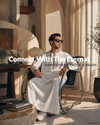
The keffiyeh is draped over the shoulder at a Nikah. The shemagh was wrapped loosely around the neck on a cold Friday morning in December. The kufi and keffiyeh together at an Eid gathering in a park full of people who look nothing like you — and you stand there, complete, belonging to something older and more certain than the city around you.
That is what the keffiyeh does. It anchors you.
Keffiyeh vs Shemagh: What Is the Difference?
You will hear both words often. They come from the same tradition and look similar to an untrained eye. But they are not the same, and understanding the difference helps you wear both better.

|
Keffiyeh |
Shemagh |
|
|
Fabric weight |
Lighter, breathable cotton |
Thicker, heavier weave |
|
Pattern |
Intricate, symbolic design |
Bolder, simpler geometric |
|
Primary use |
Cultural, ceremonial, and everyday styling |
Outdoor, travel, cold weather |
|
Regional origin |
Primarily Palestinian / Levant |
Broader Middle East, North Africa, Gulf |
|
Best for |
Thobe styling, Jumu'ah, Nikah, Eid |
Winter neck wrap, travel, layering |
|
Formality |
Higher — occasions and identity |
Functional — daily carry |
For a complete breakdown of both pieces side by side, read our full guide:
Keffiyeh vs Shemagh — What Is the Difference?
Both belong in a Muslim man's wardrobe. Browse our full range here:
5 Ways to Wear a Keffiyeh Scarf
1. The Shoulder Drape — For Nikah, Eid, Jumu'ah
The cleanest, most dignified way to wear a keffiyeh with a thobe. Fold into a large triangle. Drape over one or both shoulders, point resting on your chest. No tying needed. This style communicates presence. You are not trying to impress anyone. You already belong.
Pair this with our Premium White Keffiyeh for the most classic look at formal occasions.
2. The Classic Head Wrap — The Traditional Way
Fold the keffiyeh into a triangle. Place the long, straight edge across your forehead, fold facing outward about one inch above your eyebrows. Let both ends fall at your shoulders. Bring one end under your chin and across to the opposite side — secure at the back. The other end falls at your shoulder or wraps across.
The Red Keffiyeh is the most recognised colour in this style — bold, traditional, and unmistakable.
3. The Neck Wrap — The Everyday Carry
Fold into a triangle. Place around your neck, point facing your chest. Bring both ends behind your neck, cross them, bring them forward — leave loose or tuck in. Warm, clean, effortless.
Works with a thobe, a hoodie, a coat — anything. The Black & Orange Keffiyeh and Black & Golden Yellow Keffiyeh both excel in this style — rich colour, strong contrast.
4. The Desert Wrap — Full Coverage
Start with the Classic Head Wrap. Once secured, take the loose hanging end and bring it up across your nose and lower face. Tuck behind the wrapped section. Full coverage. Functional in a Canadian winter. Unapologetic in any season.
5. The Loose Shoulder Toss — Casual, Confident
No technique. No folding. Simply place the keffiyeh over one shoulder and let both ends hang. This is not careless — it is the effortless confidence that comes from knowing exactly who you are.
The Black & Gold Keffiyeh was made for this look — sharp, quiet, deliberate.
For step-by-step instructions, read → How to Wear a Keffiyeh Scarf
What Makes a Keffiyeh Authentic — What to Look For
The market is full of cheap imitations. Polyester versions that mimic the look but carry none of the quality. Here is how to tell the difference:
Woven cotton — not polyester. Cotton breathes, softens with wear, and drapes naturally. Polyester fakes the look. If the listing does not say 100% cotton, assume it is not authentic.
Hand-knotted or tightly finished fringe. Tassels on an authentic keffiyeh are tied or finished with precision. Fraying, raw edges, and loose ends mean it was mass-produced without care.
Natural weight and drape. Hold it up. A real keffiyeh falls evenly. It does not bunch or crinkle stiffly. The weave is consistent throughout.
Pattern symmetry. In a quality keffiyeh, the checkered pattern is even edge-to-edge. In cheap imitations, lines blur and spacing breaks down.
Wash durability. A quality keffiyeh gets better with wear. A cheap one falls apart after two washes. According to textile quality standards outlined by the International Trade Centre, consistent weave density and natural fibre content are the primary markers of long-term garment durability.
Where to Buy a Keffiyeh Scarf in Canada & USA
Finding an authentic keffiyeh in Canada or the United States — one that is well-made, ships without hidden duties, and comes from a brand that actually understands what this piece means — is harder than it should be.
Most options are:
-
Mass-produced polyester imitations from anonymous marketplace sellers
-
International orders with long waits, hidden customs charges, and no accountability
-
Generic "fashion scarves" from brands with zero connection to the culture
That is the gap Furqanwear was built to fill.
Premium woven keffiyehs — free shipping to Canada and the USA on orders over $100 CAD. All taxes are included at checkout. No duties. No hidden fees. No surprises at the door.
Browse the full collection:
-
White Keffiyeh Scarf: Clean, classic, formal
-
Red Keffiyeh Scarf: Traditional, bold, unmistakable
-
Black & Orange Keffiyeh: Rich contrast, everyday carry
-
Black & Golden Yellow Keffiyeh: Warm tones, strong presence
-
Black & Gold Keffiyeh: Sharp, deliberate, refined
-
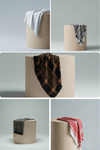
Chocolate & Cream Keffiyeh Scarf: warm earthy tones, grounded and unmistakable. The color of the earth, woven with intention.
- Obsidian & Gold Keffiyeh Scarf: deep black and gold, rooted in Islamic heritage. Quiet authority, worn with conviction.
- Black & Scarlet Keffiyeh Scarf: volcanic black with vivid scarlet woven through. Bold contrast, built for the brother who has already decided.
- Slate & Silver Keffiyeh Scarf: cool grey and silver thread. Understated, certain, impossible to ignore.
Ready to buy? We put together a complete guide on where to find an authentic keffiyeh in Canada and the USA — what to look for, what to avoid, and why authenticity matters.
The Keffiyeh Is Not a Fashion Statement
Let us end with this.
You did not survive prayer in the back of a grocery store, Arabic school on weekends, and explaining your fasts every Ramadan at work, just to wear your keffiyeh like it is an accessory.
It is not an accessory.
It is armor. It is identity. It is the quiet, unhurried answer to every moment you were made to feel like you had to shrink to fit in.
Allah ﷻ honored all the children of Adam. You are not asking for acceptance when you walk out wearing this. You are not seeking approval.
You are claiming what was already yours. Wear it like you mean it because you do. → Shop All Keffiyehs — Furqanwear