Passer au contenu
La djellaba pour homme : comment en choisir une qui dure
- par Mahidur Furqan
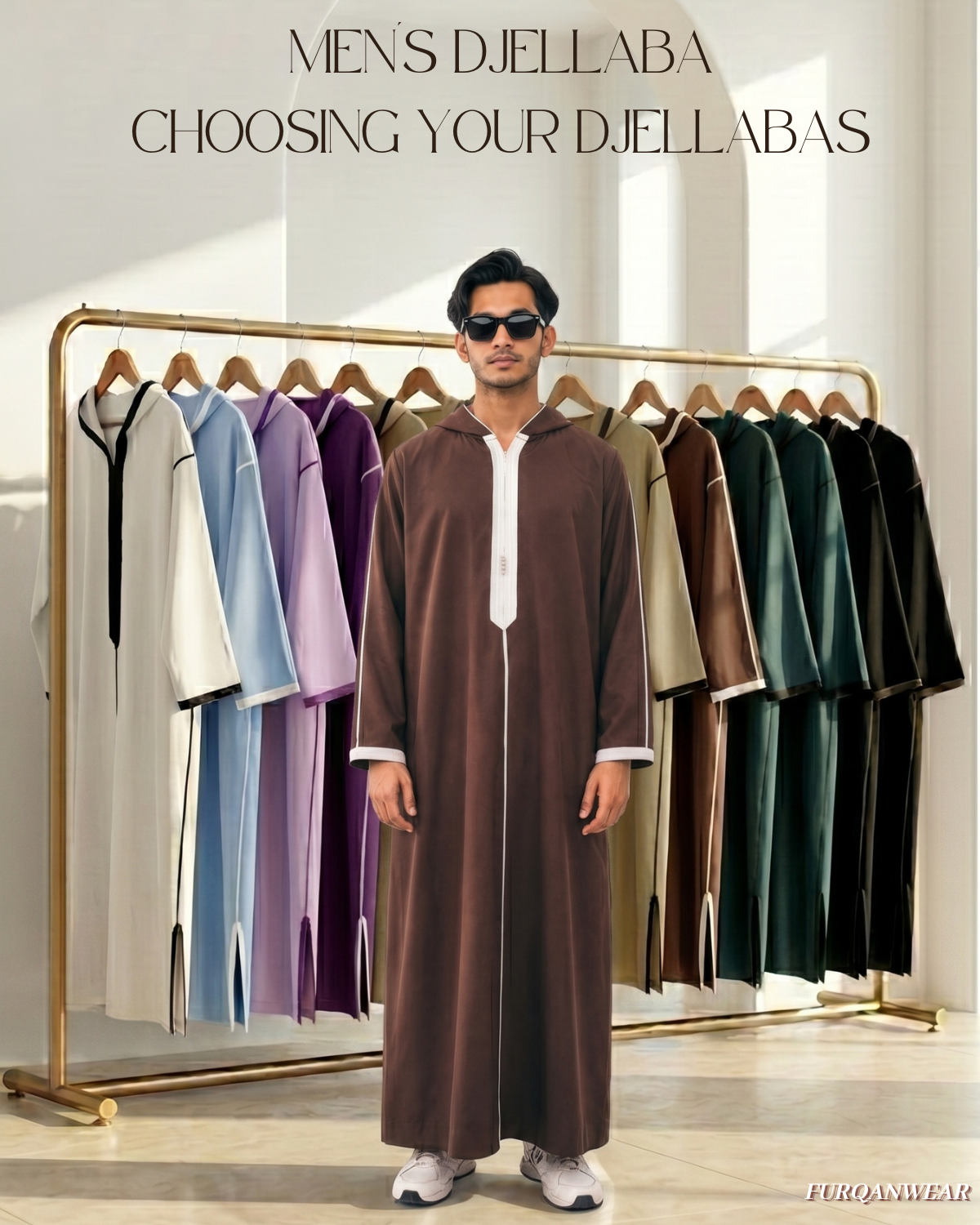
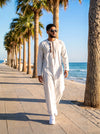
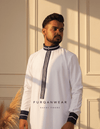
La djellaba pour homme est une robe longue à capuche portée par les hommes musulmans à travers l'Afrique du Nord et, de plus en plus, en Occident. Une pièce de qualité repose sur trois éléments : un tissu qui tombe bien et dure, une coupe qui descend nettement des épaules jusqu'aux chevilles, et des finitions soignées au niveau de la capuche et des coutures. Ce guide explique comment évaluer ces trois critères — et comment choisir une djellaba conçue pour durer que vous porterez pendant des années, et non pas juste une saison.
La plupart des hommes achètent mal leur première djellaba.
Non pas par manque de goût, mais parce que personne ne leur a dit ce qu'il fallait rechercher.
Une djellaba n'est pas un costume que l'on porte une fois avant de le ranger. Portée correctement, c'est l'un des vêtements les plus confortables et dignes qu'un homme puisse posséder — une tenue que l'on choisit pour un vendredi matin, une réunion de famille ou une soirée ordinaire où l'on veut simplement se sentir soi-même. Mais la différence entre une djellaba que vous porterez pendant des années et celle que vous porterez deux fois réside dans quelques détails que la plupart des acheteurs oublient de vérifier.
C'est le guide que nous aurions aimé que plus de frères lisent avant leur premier achat. Ce qu'est réellement une djellaba pour homme de qualité, comment juger le tissu et la coupe, et comment en choisir une adaptée à votre style de vie.
Si vous découvrez ce vêtement, commencez par découvrir ce qu'est une djellaba avant de revenir ici. Si vous le savez déjà, poursuivez votre lecture.
Ce qui distingue une bonne djellaba pour homme d'un modèle bas de gamme
Trois choses : le tissu, la coupe et les finitions. Si ces éléments sont maîtrisés, le vêtement vous mettra en valeur. Sinon, vous le ressentirez dès la première fois que vous la porterez.
Le tissu est l'élément central. C'est lui qui détermine la tenue, le mouvement et la résistance de la djellaba après dix lavages. Les djellabas traditionnelles étaient fabriquées de deux manières : en laine épaisse pour l'hiver, ou en coton léger pour l'été. Les deux sont magnifiques, mais présentent des inconvénients pour un homme vivant en ville en Occident : la laine peut tenir trop chaud dès que l'on entre à l'intérieur, et le coton pur se froisse dès que l'on s'assoit.
Vous lirez en ligne que les tissus synthétiques « manquent de respirabilité ». C'est vrai pour les matières synthétiques bas de gamme. Ce n'est pas le cas d'un mélange de microfibres de qualité, et cette distinction est cruciale. Une microfibre de qualité offre un drapé similaire au coton, résiste au froissement tout au long de la journée et reste confortable, que vous soyez dehors dans le froid ou dans un masjid chauffé. C'est la réponse moderne à un vieux problème : comment obtenir l'allure et la fluidité d'une djellaba traditionnelle sans avoir à l'entretenir avec excès.
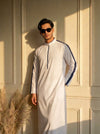
La coupe est ce qui vous donne de l'allure. Une djellaba est conçue pour être ample — c'est tout l'intérêt : aisance de mouvement, pudeur et tombé élégant. Mais « ample » ne signifie pas « sans forme ». Le vêtement doit tomber nettement depuis les épaules, les manches doivent être bien placées, et la longueur doit arriver au niveau de la cheville sans traîner. Trop courte, elle donne l'impression d'une erreur de taille. Trop longue, vous marcherez dessus au masjid. La bonne taille, au sein d'une gamme de tailles réelles, fait toute la différence entre l'impression d'avoir emprunté un vêtement et celle d'en porter un qui a été fait pour vous.
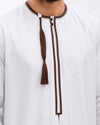
Les finitions sont le détail qui ne trompe pas. Observez les coutures autour de la capuche — le qob, cette capuche pointue qui définit la djellaba — et le long des coutures. Des coutures propres et régulières sont le signe d'un vêtement durable. Des coutures irrégulières et des fils qui dépassent annoncent un vêtement qui ne survivra pas à la saison.
Pourquoi le tissu est plus important que vous ne le pensez
Voici la partie que la plupart des acheteurs négligent, et celle qui déterminera si vous porterez réellement le vêtement.
Une djellaba est mise à rude épreuve. Vous priez dedans — debout, incliné, prosterné, assis. Vous la portez pendant les longues journées de l'Aïd et les soirées en famille encore plus longues. Vous voyagez avec. Un tissu qui ne suit pas le rythme va se froisser, se détendre ou s'user rapidement ; et une djellaba qui demande trop d'entretien est une djellaba que vous finirez par délaisser.
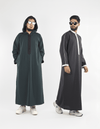
C'est l'argument honnête en faveur d'une djellaba en microfibre moderne plutôt qu'une traditionnelle. Les djellabas Furqanwear sont taillées dans un mélange de microfibres de qualité supérieure — 90 % polyester, 10 % élasthanne, provenant de Dubaï. C'est un choix délibéré, pas une solution de facilité. L'élasthanne apporte une aisance de mouvement confortable. Le tissage offre un tombé fluide et résiste au froissement qui gâche le coton. Elle se lave facilement et conserve sa forme. De plus, elle est polyvalente tout au long de l'année — confortable durant les mois frais, et assez respirante en intérieur — ce qu'une djellaba en laine épaisse ne peut tout simplement pas revendiquer.
Nous ne disons pas que la laine n'est pas belle. Elle l'est. Mais pour un homme menant une vie moderne — se déplaçant, travaillant, priant, passant sans cesse de l'extérieur froid à des pièces chauffées — la djellaba en microfibre est celle que vous porterez vraiment. Pour une analyse complète de la comparaison des tissus, le guide des tissus va plus loin.
Choisir votre couleur et ce qu'elle exprime
La couleur est le choix le plus personnel pour une djellaba, et celui sur lequel les hommes réfléchissent trop. Voici une approche simple, basée sur l'usage que vous en ferez.
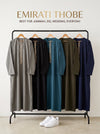
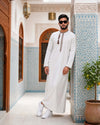
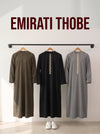
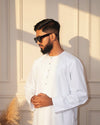
Pour le Jummah et les moments formels, les tons clairs sont les plus appropriés. La djellaba blanche est une base — sobre, réfléchie, le choix naturel pour la prière du vendredi et le matin de l'Aïd. Le kaki clair offre cette même sobriété avec une touche plus chaleureuse, idéale pour le quotidien.
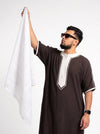
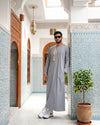
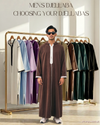
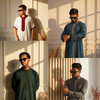
Pour le quotidien, vous souhaitez une couleur facile à porter. Le bleu ardoise est calme et raffiné — celle qui devient votre incontournable. Le brun boisé est ancré et naturel, et trouve tout son sens lors des mois plus frais.
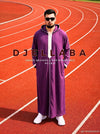
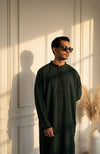
Pour marquer votre présence, choisissez des teintes plus profondes. Le violet profond est audacieux sans être criard — il impose le respect avant même que vous ne parliez. Le vert émeraude est frappant et traditionnel, fait pour être remarqué. Ces deux choix conviennent à un homme qui assume d'être vu.
Pour les mariages et les occasions les plus solennelles, les tons plus doux et lumineux prennent tout leur poids. Le vieux rose est doux et moderne. L'argenté est lumineux et cérémonial — le choix qui souligne que l'occasion mérite une tenue particulière.
Il n'y a pas de mauvais choix. Il y a seulement la question de savoir où vous la porterez le plus — commencez par là.
Comment la djellaba s'intègre au reste de votre garde-robe
La djellaba n'est pas une pièce isolée. C'est l'ancre d'un style vestimentaire.
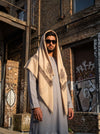
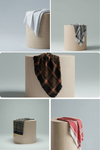
Portée avec un kufi, elle est prête pour le Jummah. Portée avec un shemagh plié sur les épaules, elle prend une dimension importante pour un mariage ou l'Aïd. Portée seule sur un vêtement simple, c'est ce qu'il y a de plus confortable dans votre garde-robe. Elle s'harmonise naturellement avec le reste des vêtements islamiques pour homme — et si la djellaba ne convient pas tout à fait à une occasion précise, un qamis bien coupé pourrait l'être. Ces deux pièces sont issues de traditions différentes, et comprendre la différence entre une djellaba et un qamis vous aide à constituer une garde-robe adaptée à chaque situation.
Lorsque vous serez prêt à découvrir toute la gamme, la collection de djellabas pour homme regroupe les dix coloris au même endroit — ou explorez la collection complète de Furqanwear pour découvrir tout ce qui peut l'accompagner.
Ce que « premium » devrait réellement signifier
Le terme « premium » est tellement utilisé qu'il finit par perdre tout son sens. Voici ce qu'il devrait signifier lorsque vous achetez une djellaba.
Premium ne signifie pas un prix élevé ou une marque de luxe. C'est un tissu choisi avec intention. C'est une vraie gamme de tailles — les djellabas Furqanwear vont du XS au 3XL, conçues pour les hommes musulmans de toutes corpulences, pas seulement pour la moyenne. C'est une conception propre que vous pouvez vérifier. C'est une marque qui vous dit la vérité sur ce que vous achetez — le vrai tissu, la vraie coupe, les vraies conditions d'expédition — au lieu d'habiller un vêtement bas de gamme avec des mots pompeux.
C'est aussi les aspects pratiques qui déterminent si l'achat en ligne en vaut la peine : les djellabas Furqanwear sont expédiées frais de douane inclus au Canada et aux États-Unis, avec la livraison gratuite à partir de 100 $ CAD et 14 jours pour les retours. Aucune surprise de douane à la réception. Aucune devinette. Ce que vous voyez lors du paiement est ce que vous payez.
Voilà ce que signifie premium. Ce n'est pas la djellaba la plus chère. C'est celle conçue honnêtement, qui vous va bien, et que vous porterez encore dans trois ans.
La djellaba porte des siècles d'histoire
Une dernière chose qui mérite d'être connue, car elle change la façon dont on se sent en la portant.
La djellaba n'est pas une tendance passagère. Elle porte des siècles de tradition maghrébine — un vêtement connu sous différents noms dans le monde arabe, porté par les hommes musulmans du Maroc à l'Algérie jusqu'à la Tunisie, bien avant qu'il n'intègre les garde-robes occidentales. Lorsque vous en enfilez une, vous ne portez pas un costume ou un accessoire de mode. Vous perpétuez quelque chose. Ce poids historique est ce qui donne à une bonne djellaba son caractère unique.
Choisissez-en une conçue pour porter cet héritage.