Passer au contenu
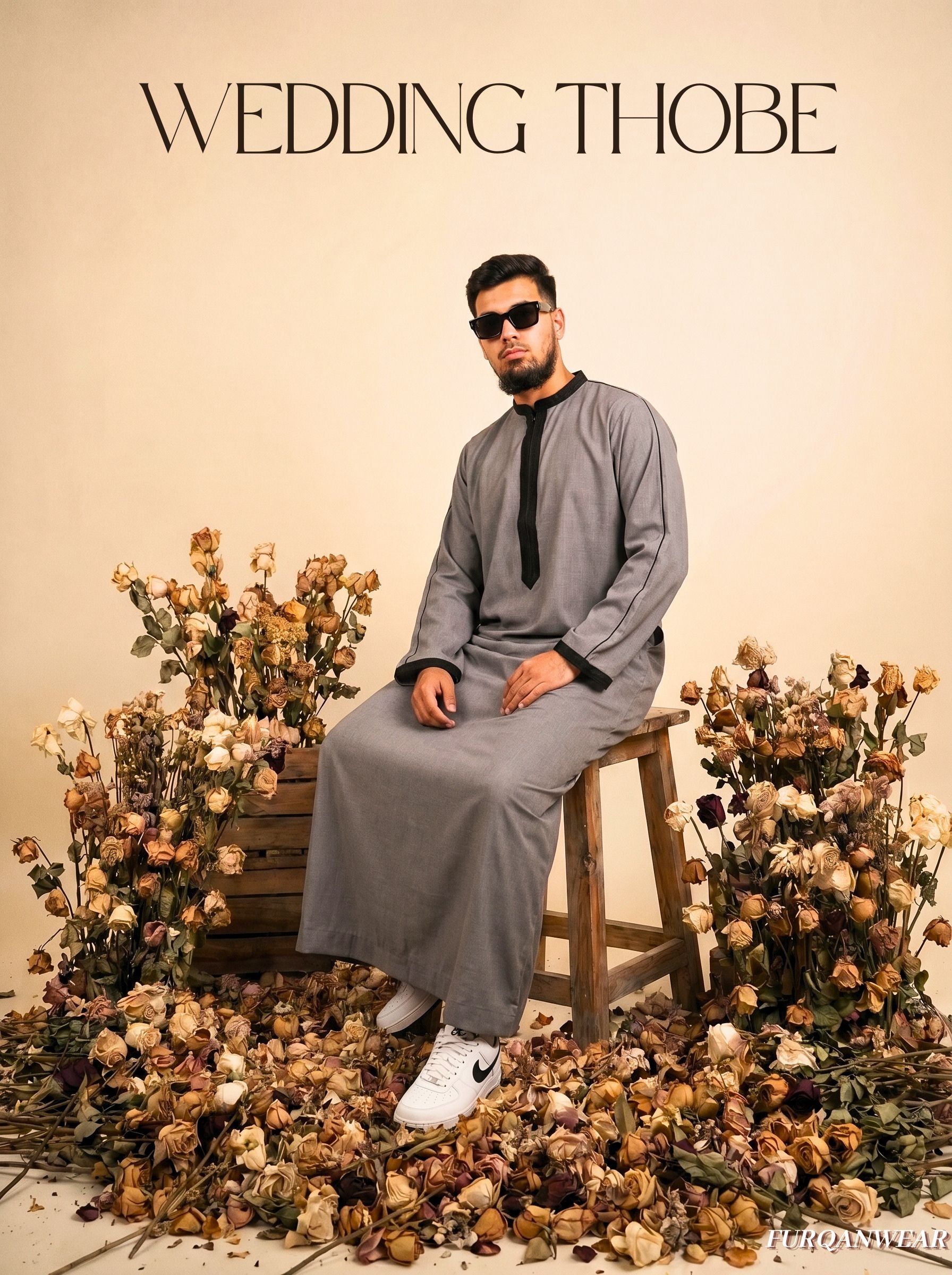
Wedding Thobe Guide for Men (Groom, Groomsmen & Guests)
- par Mahidur Furqan
The day of your nikah is one of the few in a lifetime that asks you to stand in front of the people you love and become someone new. A son becomes a husband. Two families become one. The contract you make in front of Allah ﷻ is the foundation of every day that follows it.
What you wear should match the weight of that.
But here's the part nobody tells the brother getting married in Toronto, Brooklyn, Manchester, or Sydney — the brother whose closet has more suits than thobes, whose friends might not know what a nikah even is, who's spent his life moving between two worlds and now has to dress in a way that honours both at once.
You're not supposed to look like a copy of someone else's wedding. You're supposed to look like you — dignified, present, dressed with the care this moment asks for, and grounded in who you are as a Muslim man.
This guide walks you through every question you actually have. What the groom wears. What your brothers and groomsmen wear. What guests wear. The colours that work for the nikah versus the walima. The fabric, the fit, the accessories, the timing. The honest answers, written for the brother who wants to get this right without pretending to be someone he isn't.
Let's go through it.
What is a nikah and why does what you wear matter?

A nikah is the Islamic marriage contract — the moment a Muslim man and woman become husband and wife in front of Allah ﷻ, their families, and witnesses. It is the religious heart of a Muslim wedding, regardless of how big or small the surrounding celebrations are.
The nikah is usually held in a mosque, a community hall, or the family home. An imam officiates. The mahr — a gift from the groom to the bride — is agreed upon. Both the bride and groom give their consent (the ijab and qabool) in front of witnesses. The contract is signed. The marriage is real.
That moment is the centre of everything else. The walima reception, the mehndi night, the dinners with extended family — all of it grows from the nikah. Which is why what you wear to it carries a different weight than what you wear to any other celebration in your life.
You're not just dressing for a party. You're dressing for the contract that begins a new chapter of your life as a Muslim man. The clothing should reflect that — modest, dignified, and intentional. Not flashy for the photos. Not borrowed from a Western tradition that was never yours. Just clean, considered, and grounded.
For most Muslim men, that means one of three options: a thobe, a sherwani, or a formal suit. Each has its place. We'll walk through how to choose between them as we go.
Can a man wear a thobe to his nikah?
Yes and across much of the Muslim world, the thobe is the traditional wedding garment, not a substitute for one. A clean, well-cut thobe is one of the most respected things a Muslim man can wear on his nikah day.
For brothers who grew up in the West, this is the question that holds them back. "Will I look out of place? Will people stare? Is this too traditional?"
The honest answer: a brother wearing a clean white thobe at his own nikah does not look out of place. He looks like the groom. The thobe is recognised, respected, and rooted in centuries of practice — it's what Muslim grooms wore long before any of us were born, and it's what brothers in cities like London, New York, and Toronto are wearing in growing numbers today. Not because it's a trend, but because it carries the meaning that a Western suit cannot.
You don't need to wear a thobe. A formal suit or a sherwani can also be appropriate, depending on your cultural background and the family's expectations. But if you've been wondering whether the thobe is "enough" for a wedding — yes. It's more than enough. It's often the right answer.
Restraint reads as confidence. A thobe with quiet detailing and the right fall says more about a man than a coat heavy with embellishment. The Prophet ﷺ valued cleanliness and care in appearance without extravagance. That principle applies as much to a groom's day as any other.
What should the groom wear to his nikah?
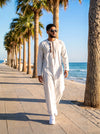
The groom should wear a clean white or ivory wedding thobe in premium fabric, fitted to fall one to two inches above the ankle and sit cleanly on the shoulders. White is the traditional and most respected nikah colour for grooms across the Muslim world.
Here's the breakdown:
Colour: White is the standard. Ivory and cream are acceptable variations, especially if pure white feels too stark for your skin tone or the venue's lighting. Keep the lightest, purest shade for yourself — your guests can wear deeper tones, but the groom should be the one in the cleanest white.
Fabric: For a daytime or summer nikah, choose breathable cotton — it keeps you composed through hours of standing, greeting, and photos. For an evening or winter nikah, a premium cotton blend with a smoother finish photographs better and resists creasing through the long day. Avoid thin synthetic-heavy fabrics that cling or wrinkle.
Detailing: A subtle collar, quiet stitching at the cuffs, or a refined button placement is enough. You do not need heavy embroidery to "look like the groom." In fact, restraint often reads more confidently than ornate detailing. If you want the option of grandeur, the answer is layering a bisht (a flowing ceremonial cloak) over your thobe rather than overloading the thobe itself with embellishment.
Fit: The thobe should fall one to two inches above the ankle, sit clean on the shoulders, and skim the body without clinging. Never baggy. Never tight. If you're between sizes, size up slightly for the wedding — you'll be sitting, standing, moving, and a touch of room is forgiving.
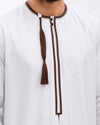
Style cuts: If you have a cultural anchor — Saudi, Emirati, Omani, Moroccan — leaning into that heritage with the matching cut is a beautiful choice. A classic Saudi thobe reads as clean and timeless. An Emirati thobe with the tassel detailing reads as understated luxury. An Omani thobe with the wide hem and embroidery reads as bold and ceremonial. Each is correct in its own way.
What should the groom's brothers and groomsmen wear?
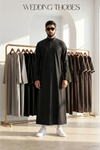
Groomsmen and the groom's brothers should wear thobes in the same family of tones as the groom but in a different shade — typically navy, deep grey, ivory, or black — so the wedding party looks coordinated without anyone competing with the groom.
The principle is simple: same family, individual pieces. Don't dress everyone identically — it looks like a uniform, not a wedding party. But don't let everyone wear whatever they want — it looks scattered.
A workable rule: the groom in pure white, the groomsmen and brothers in one coordinated tone — often navy for evening weddings, ivory or beige for daytime, deep grey or charcoal for winter ceremonies. Each brother chooses his own cut and detailing within that colour. The result looks intentional in photos without being matchy.
If your groomsmen don't own thobes, this is the time to gift one or coordinate ordering together. A coordinated wedding party in thobes — instead of mismatched suits — transforms the look of the day in photos.
One quiet practical note: order all the thobes from the same brand and the same fabric base if possible, so the tones genuinely match. Two "navy" thobes from two different makers can look noticeably different side by side.
What should male guests wear to a nikah?
Male guests should wear a modest, respectful outfit — most commonly a white, navy, or black nikah thobe, or a formal dark suit., or a formal dark suit. The key is modesty, dignity, and not wearing anything that competes with the groom's look.
You have more flexibility as a guest than as a groom, but the principles are the same: modest, intentional, respectful.
If you're going to wear a thobe — white is always appropriate. Navy and black are excellent for evening ceremonies. Avoid pure white that's whiter than the groom's, and avoid heavy embroidery that draws attention.
If you prefer a suit — a dark, well-fitted suit (navy, charcoal, deep grey) with a clean shirt and modest tie is respectful and safe, especially in Western contexts where many male guests will be in suits regardless. Avoid all-black if the family's tradition treats it as a mourning colour, and avoid loud patterns or bright statement pieces.
What to avoid as a guest — shorts (obvious), anything sheer or tight, short sleeves at a mosque ceremony, wearing the same shade of white as the groom, or anything heavily embellished that could compete with him in photos.
At a mosque ceremony — choose footwear that's easy to slip off. Loafers, leather sandals, or simple dress slip-ons work better than tightly laced shoes.
What about the walima — does the outfit change?
Yes — the walima typically calls for a different outfit than the nikah, often in deeper, richer tones. Where the nikah outfit is ceremonial and restrained, the walima outfit can be celebratory and bolder. Many grooms wear a clean white thobe for the nikah and a deeper shade — navy, black, burgundy, or a bisht over the thobe — for the walima reception.
The walima is the celebration the groom hosts after the nikah, a sunnah of the Prophet ﷺ that's typically held as a dinner or reception for family and friends. The mood is festive, the lighting is often evening, and the dress code shifts to match.
For the groom, this is where deeper tones, more substantial fabric, or layered pieces work. A navy or black thobe with subtle embroidery. A bisht draped over a white thobe for a more ceremonial silhouette. A cream-and-gold combination for warmth under evening lighting.
For guests, the walima dress is similar to the nikah dress but with slightly more latitude on colour and detailing. Embroidered thobes, deeper jewel tones, slightly more festive accessories — all appropriate.
What colour thobe should you wear?
The most respected nikah colour for a Muslim groom is white. For guests, white thobe, navy, and black are all appropriate, with cream and ivory as soft alternatives. Avoid pure white if you're a guest and the groom is also in white.
Here's the full colour map for a nikah:
White: the timeless groom's choice. Signals purity, formality, and respect. Appropriate for guests too, but step down to ivory or cream if you don't want to compete with the groom.
Ivory/cream/off-white: softer alternatives to pure white. Excellent for grooms with warmer skin tones, for daytime ceremonies, or for guests who want the "white" look without matching the groom directly.
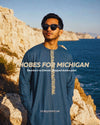
Navy: modern, dignified, photographs cleanly under evening lighting. Strong choice for grooms who want something less traditional, and a favourite for groomsmen and male guests.
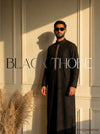
Black thobe: bold and formal. Best for evening ceremonies. Some cultural traditions associate black with mourning, so check with the family before wearing all-black if you're unsure.
Deep grey/charcoal: understated, versatile, photographs well in both daytime and evening. A safe and modern choice for guests.
Burgundy/maroon / deep jewel tones: better suited to the walima or a less formal ceremony than the nikah itself. Statement-making without being flashy.
Gold/champagne: typically reserved for the walima reception, often via embroidery or a bisht layered over white.
What to avoid: neon, brights, heavy printed patterns, and anything that pulls attention away from the bride and groom.
How do you choose the right fabric?
Match the fabric to the season and the time of day. Breathable cotton for daytime or summer ceremonies. Premium blends with a smoother finish for evening or winter ceremonies. Avoid thin synthetics that wrinkle or cling, and avoid fabrics so heavy they're uncomfortable for a long day on your feet.
Some practical guidance:
Summer daytime nikah: fine cotton or cotton-linen blends. Breathable, light on the body, structured enough to hold their line through hours of standing.
Spring or autumn nikah: mid-weight cotton blends. The sweet spot for most ceremonies in temperate climates.
Winter nikah: heavier cotton blends or thobes with a warmer fabric backing. Layer a bisht or a thicker outer layer if the venue is cold.
Evening reception: premium cotton blends with a slight sheen or polyester-cotton blends specifically designed for formal occasions. These photographs cleanly and resist creasing.
Avoid: anything purely synthetic that clings or holds static, fabrics so thin they show what's underneath, or anything labelled "wrinkle-prone."
A senior tip from brothers who've been through this: do a sit-and-stand test in the thobe before the wedding day. Sit for ten minutes in the fabric, then stand up and look in the mirror. If the creases settle out within a minute, the fabric will hold up through the day. If they don't, switch.
How should a wedding thobe fit?
A wedding thobe should fall one to two inches above the ankle, sit cleanly on the shoulders, and skim the body without clinging or hanging loose. Never baggy. Never tight. Every piece in the wedding thobe collection runs XS through 3XL, so the fit is a choice — not a compromise.
The fit is what separates a thobe that looks intentional from one that looks borrowed.
Length: one to two inches above the ankle, exposing the top of your dress shoe or slip-on. Anything dragging on the floor reads as ill-fitting. Anything more than three inches above the ankle reads as too short.
Shoulders: the shoulder seam should sit at the edge of your actual shoulder, not falling halfway down your upper arm. This is the single biggest indicator of a well-cut thobe.
Body: the thobe should skim, not cling. A slight drape through the chest and waist is correct. Tightness around the chest or shoulders is wrong.
Sleeves: should fall to the wrist bone. Too short looks juvenile; too long bunches at the cuff.
If you're between sizes: size up for the wedding. You'll be sitting, kneeling for prayer, standing, eating, and embracing relatives. A touch of room is forgiving. Tight fits are unforgiving.
Always check the brand's specific size chart before ordering online. Sizing varies between makers, and your "large" in one brand can be a "medium" in another. A good size guide lists measurements in both inches and centimetres so you can take your own measurements and order with confidence.
How do you style a thobe — accessories that finish the look
Style a wedding thobe with deliberate, restrained accessories — a Yemeni shemagh or keffiyeh draped at the shoulder, a clean kufi or imamah, leather slip-ons, simple cufflinks, and a single watch. Let the thobe lead. Accessories should support, not compete.
The accessory layer is where many brothers either lift their look or overload it. The rule is restraint.
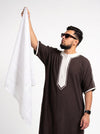
Shemagh or keffiyeh: a folded, draped keffiyeh at the shoulder or worn loosely around the neck adds presence and cultural anchor without noise. A red-and-white keffiyeh with an embroidered white thobe creates a striking groom look. A plain white Yemeni shemagh adds quiet sophistication. Match the shemagh to the formality — heavier weave for the groom, lighter drape for guests.
Headwear: a clean kufi cap is a respectful, simple option. A wrapped imamah or turban suits more formal or culturally traditional looks. For groomsmen and guests, a kufi is almost always the right answer.
Bisht (cloak): the bisht is the ceremonial layer that turns a thobe into a true groom's outfit. Draped over a white thobe, it adds gravity and presence without changing the thobe underneath. Reserved primarily for the groom, sometimes worn by the father of the groom in very formal weddings.
Footwear: leather slip-ons, sleek loafers, or traditional Arabian sandals. Avoid sneakers, tightly laced dress shoes (you'll be removing them at the mosque), and anything that looks casual.
Watch and jewellery: one elegant watch is enough. Simple silver cufflinks if your thobe has French cuffs. A modest ring if you wear one. Avoid stacking watches, bracelets, or chains — restraint is the signal of a man who's done this with intention.
Thobe, sherwani, or suit — which is right for you?
The right choice depends on your cultural background and the formality of the wedding. A thobe suits brothers from any cultural tradition who want a clean, modern Muslim wedding look. A sherwani suits South Asian brothers who want heavier ornamentation. A formal suit suits Western contexts where the cultural tradition is mixed.
A short breakdown:
Wear a thobe if:
-
Your cultural heritage is Arab, Gulf, North African, East African, or you simply want the cleanest Muslim wedding look
-
You want comfort through a long ceremony day
-
You want a look that's modern, respected, and unmistakably Muslim
-
You're a guest at any Muslim wedding and want a safe, dignified choice
Wear a sherwani if:
-
Your cultural heritage is South Asian (Pakistani, Indian, Bangladeshi, Sri Lankan) and your family expects traditional dress
-
You want heavier ornamentation and a more layered silhouette
-
The wedding has a strong South Asian cultural emphasis
Wear a formal suit if:
-
The wedding is mixed-cultural and Western-formal
-
Your family explicitly prefers Western dress
-
You're a guest at a Western-leaning Muslim wedding
There's no single "right" answer for every brother. There's the right answer for your day, your family, and the look that lets you stand confidently in front of everyone watching. The thobe is increasingly the choice for brothers in the West who want something genuinely theirs — comfortable, recognised, and rooted in their faith without belonging to one regional culture more than another.
Dressing by cultural background
Choose the cut that matches your cultural anchor — or pick the one that resonates with you regardless of background.
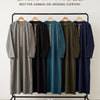
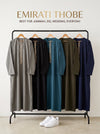
Arab / Gulf tradition: the classic Saudi thobe (clean, structured, often with a stand-up collar) or the Emirati thobe (with a delicate tassel detail at the neckline) are the heart of Arab wedding dress for men. Both work beautifully for grooms and guests.
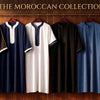
North African tradition: Moroccan thobes (often with embroidered detailing and sometimes a hood for winter weddings) carry a distinctive geometric aesthetic. The colours skew slightly warmer — cream, beige, sand, ivory — than the pure white standard.
Omani tradition: the Omani dishdasha with its wider hem and bold embroidery is a statement piece — best suited to grooms with a strong cultural connection to the Gulf, and to walima receptions more than nikah ceremonies.
South Asian tradition: the sherwani (heavier, more ornate, layered over a kurta and churidar) is the traditional South Asian groom's outfit. For brothers from South Asian backgrounds who prefer a thobe, a clean white or cream thobe is increasingly common and entirely respected. Many modern South Asian Muslim grooms wear a thobe for the nikah and a sherwani for the walima — both honoured in one wedding.
West African / East African tradition: boubou, kaftan, or thobe-style garments are all appropriate. Choose the version that matches your family's tradition and the formality of the day.
Western Muslim with no strong cultural anchor: choose the look that resonates with you. The thobe is increasingly the default for brothers who want something distinctly Muslim, modern, and not tied to one regional culture more than another. A clean white thobe transcends background.
When should you order your wedding thobe?
Order your wedding thobe at least four to six weeks before the wedding. That timeline gives you room to confirm the fit, exchange the piece if needed, and avoid any last-minute shipping pressure. For grooms ordering coordinated thobes for groomsmen, allow eight weeks.
The week-before-the-wedding scramble is the most common preventable mistake brothers make. A few practical timing notes:
For the groom: order four to six weeks ahead. Try the thobe on within forty-eight hours of receiving it. If the fit isn't right, you have time to exchange.
For groomsmen/brothers of the groom: order coordinated thobes eight weeks ahead. Coordinating multiple orders takes longer, and you want every brother in the wedding party to receive his piece with time for adjustments.
For US-based brothers ordering from Canada: Furqanwear handles all duties on our end, so there's no customs delay or surprise bill at the door. Standard shipping reaches most US addresses within five to ten business days. Free shipping on orders over $100 CAD applies across both Canada and the USA.
For destination weddings: order at least eight weeks ahead and ship the thobe to your home address first. Test the fit before the wedding. Then either pack it carefully in your luggage or ship it directly to the destination if logistics allow.
Common mistakes to avoid
The most common nikah outfit mistakes are: ordering too late, choosing the wrong colour for your role, picking poor-quality fabric, ignoring fit, over-accessorising, and forgetting to coordinate with the wedding party.
The short list every brother should read before ordering:
-
Ordering the week of the wedding. You will not have time to fix anything. Order at least four weeks ahead.
-
Wearing pure white as a guest while the groom is also in white. Step down to ivory or cream, or wear a different colour entirely.
-
Choosing a thobe that's too long or too short. One to two inches above the ankle. That's the rule.
-
Picking the cheapest fabric available. Wedding thobes get hours of wear, embraces, sitting, standing, and photos. Cheap fabric wrinkles, clings, and tears in the worst possible moments. Invest in premium fabric.
-
Forgetting the size chart. Brands size differently. Always measure yourself and check the chart before ordering.
-
Wearing tightly laced shoes to a mosque ceremony. You will be removing them. Slip-ons are your friend.
-
Heavy embroidery on the groom's thobe. Restraint reads more confident than ornate. If you want a ceremonial layer, add a bisht — don't overload the thobe itself.
-
Mismatched groomsmen. Coordinate the wedding party before everyone orders. One brand, one tone, individual pieces within that tone.
-
Forgetting the walima. Many grooms only plan the nikah outfit and scramble for the walima. Plan both at once.
Why brothers across North America choose Furqanwear
A few honest, factual reasons brothers in Canada, the USA, Australia, and New Zealand have chosen Furqanwear for their wedding day:
-
Toronto-based, owns its inventory. Real quality control, real shipping from real warehouses — not drop-shipped from overseas.
-
Duties handled on our end for US orders. No customs bills at your door. No surprise charges the week before your wedding. You see the price, you pay the price.
-
Free shipping over $100 CAD across Canada and the USA. Premium thobes that ship without the friction.
-
Sizes XS to 3XL. Real range, real fit, with measurements in inches and centimetres.
-
30-day returns. If the fit isn't right, you have time to exchange before the day.
-
Faith-led, dignity-first. Premium Islamic menswear rooted in our values as Muslim brothers, not in chasing trends.
Shop wedding & nikah thobes
The brothers who get this right are not the ones who spend the most. They're the ones who choose with intention.
Your nikah is the day you stand as a husband for the first time. The day a new household begins with your name on it. What you wear should match the weight of that moment — clean, dignified, and unmistakably you.
A well-cut thobe carries it. Order early. Get the fit right. Keep the accessories deliberate. Stand in front of your family, your friends, and Allah ﷻ as the man you've become.
The clothing is the easy part. The marriage is the work that follows. Inshallah, it carries you both well.
Premium white and neutral thobes for your nikah day. Free shipping over $50 CAD, duties handled across the USA. Sizes XS–3XL.