Skip to content
Islamic Clothing for Men — Every Garment, Explained
- by Mahidur Furqan
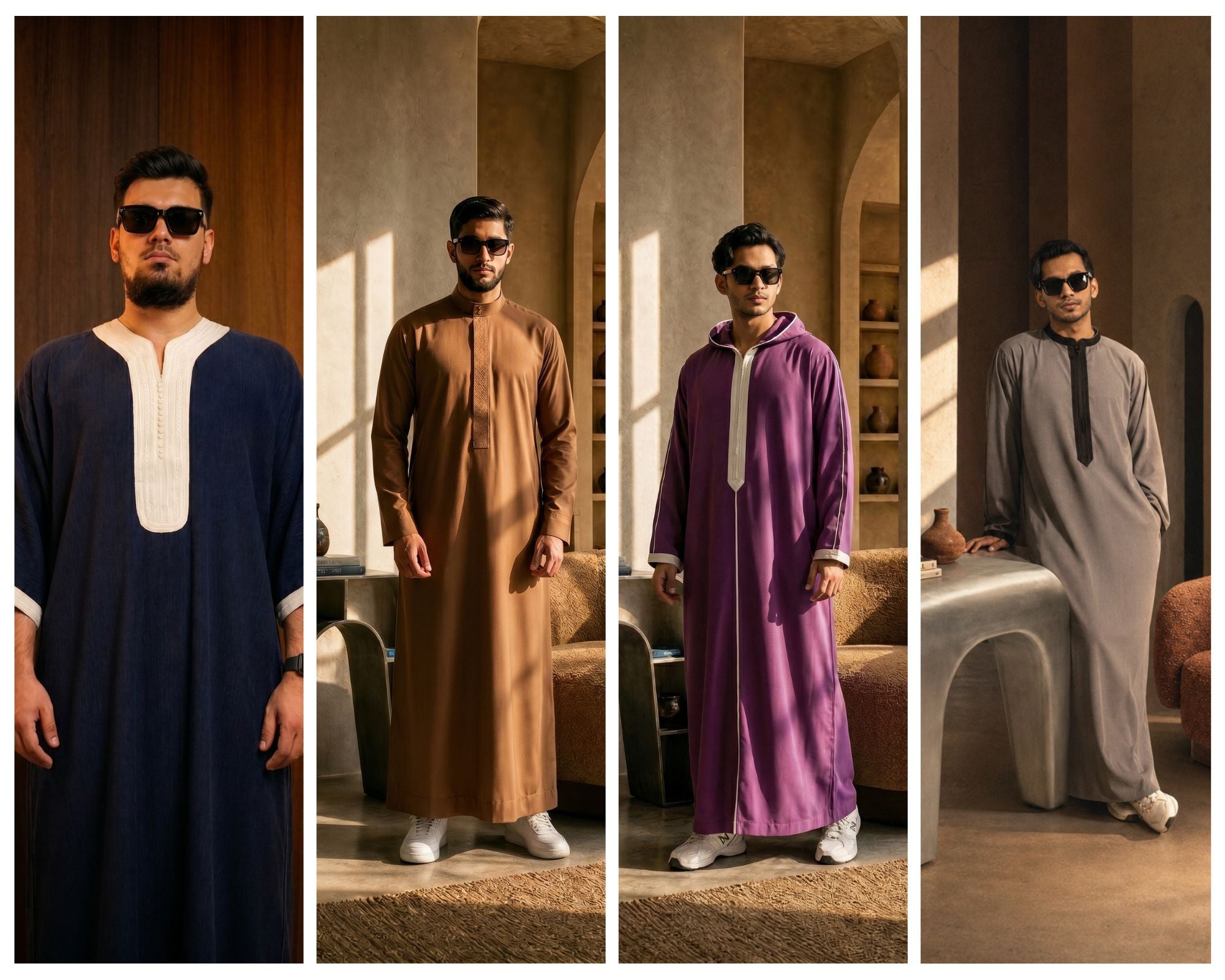
Islamic clothing for men is modest, loose-fitting attire that covers the body with dignity. The best-known piece is the thobe — a long, ankle-length robe, also called a thawb, jubba, kandura, dishdasha or djellaba, depending on the region. Other staples include the kufi (prayer cap), the shemagh and keffiyeh (headscarves), and the bisht (a formal cloak).
Hey brother. If you've ever stood in front of the mirror before Jummah, or scrolled looking for something to wear for Eid, you've probably hit the same wall: so many names, so many styles, and no one explaining it plainly. Thobe, thawb, jubba, kandura, djellaba. Are they different things? The same thing? What do you actually wear, and when?
Let's clear it up. One garment at a time.
What is Islamic clothing for men called?
There isn't one name — there are many, and most point to the same idea: a long, modest robe worn by Muslim men. The word changes with the region, not the garment.
-
Thobe/thawb — the general Arabic word, meaning simply "garment." Most common in Saudi Arabia and the Gulf.
-
Jubba — the same robe, the name used across South Asia and among English-speaking Muslims in the West.
-
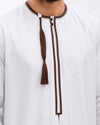
Kandura — the UAE name. Collarless, with a small tassel (the tarboosh) at the neck.
-
Dishdasha — the Omani and Kuwaiti name for the same robe.
-
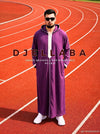
Djellaba — the North African version, usually hooded, rooted in Moroccan tradition.
Same root garment. Different cut, different name, one shared meaning: modesty worn with dignity.
Islamic men's clothing by name and region
|
Name |
Region |
What sets it apart |
|
Thobe / Thawb |
Saudi Arabia, Gulf |
The general term, collared, structured |
|
Jubba |
South Asia, the West |
Same robe, broader everyday use |
|
Kandura |
UAE |
Collarless, neck tassel (tarboosh) |
|
Dishdasha |
Oman, Kuwait |
Gulf cut, often with embroidery |
|
Djellaba |
Morocco, North Africa |
Loose, hooded |
|
Kufi |
Worldwide |
Short prayer cap |
|
Shemagh / Keffiyeh |
Levant, Gulf, Yemen |
Checked headscarf |
|
Bisht |
Arabian Peninsula |
Formal cloak worn over the thobe |
The thobe — the foundation
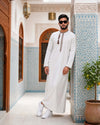
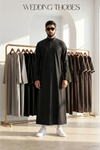
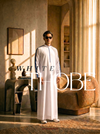
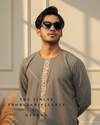
The thobe is the centre of a Muslim man's wardrobe. Ankle-length, long-sleeved, loose. Worn for daily life, for prayer, for Jummah, for Eid. One garment that carries across every part of your week. Explore the full range of men's thobes collection.
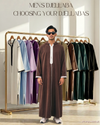
Every region of the Muslim world has its own cut. Here are the ones we carry.
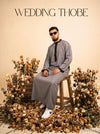
The Royal Thobe — wear it like you mean it
Some occasions call for more. The Royal thobe answers.
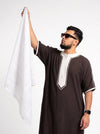
Made from premium silk-blend and wool fabrics, the Royal thobe is built for the moments that matter — Eid, weddings, and formal gatherings. The kind of room you walk into and people notice. Not because you're loud. Because you're composed.
Embroidery along the collar and cuffs. A structured silhouette that holds its shape. Fabric that feels as good as it looks. Browse the Royal thobe collection.

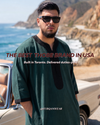
The Saudi Thobe — clean, classic, uncompromising
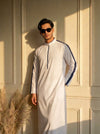
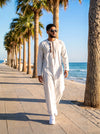
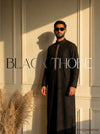
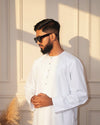
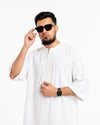
The Saudi thobe is understated power. Crisp collar. Straight cut. Ankle-length. No excess — just precision.
Worn daily by millions across the Muslim world, it has earned its place as the standard of Islamic menswear. Clean white for Jummah and Eid. Darker tones for everyday. Either way, you walk in looking like you mean it.
For brothers in Canada and the USA, it works harder than you think. Breathable cotton keeps you cool in summer. Layered over a thermal, it handles a Toronto winter too. Our Saudi thobes are cut for Western builds — longer arms, broader shoulders — without losing the classic line.

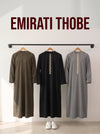
The Emirati Thobe (Kandura) — Gulf simplicity
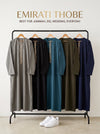
Collarless, with the signature tassel at the neck. Softer and more flowing than the Saudi cut, and one of the easiest to wear day to day. See Emirati thobes.

The Omani Thobe — quiet dignity, refined detail
The Omani thobe doesn't shout. It doesn't need to.
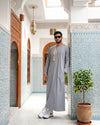
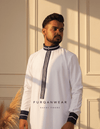
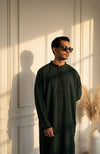
A crisp, tailored structure with subtle embroidery around the collar and cuffs — the choice of the man who knows that real elegance is measured, never excessive. Lightweight, breathable fabric sits it perfectly between formal and everyday. Sharp enough for a gathering. Easy enough for Jummah every week. See Omani thobes.

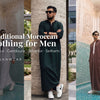
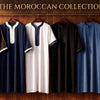
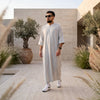
The Moroccan Thobe (Djellaba) — tradition, comfort, everyday ease
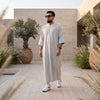
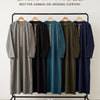
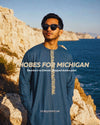
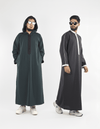
The Moroccan thobe — known as a djellaba — is one of the most loved garments in Islamic dress. Relaxed, full-length, often hooded, carrying North African craft in every stitch.
For brothers in Canada and the USA, it's a natural fit. Lightweight cotton and linen for summer. Heavier woven fabrics for the cold months. One garment, every season. Look through Moroccan thobes and djellabas.

The other staples
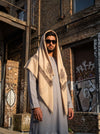
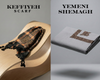
The thobe rarely travels alone. A Yemeni shemagh draped over the shoulder is what finishes it — the same pairing you see outside any masjid after Jummah.
The kufi. The short, rounded prayer cap — small, but it finishes the look and carries the Sunnah of covering the head. See the kufi collection.
The shemagh and keffiyeh. The checked headscarves — worn over the shoulders or wrapped, for warmth, for style, for identity. New to them? Read what a Yemeni shemagh is, or the difference between a keffiyeh and a shemagh.
The bisht. The formal cloak worn over the thobe — for weddings, Eid, and moments that call for weight.
Why do Muslim men wear the thobe?
Three reasons, usually all at once.
Modesty. Islam asks men to cover and carry themselves with haya — dignity, not display. A loose robe does that without effort.
The Sunnah. The Prophet ﷺ favoured simple, modest garments, and loved the colour white. He ﷺ said: "Wear white clothes, for they are among the best of your garments." (Sunan Abi Dawud). Wearing a thobe isn't an obligation but for many brothers it's a quiet way to follow his example. For the principles behind it, read how the Prophet ﷺ taught men to dress.
If that ever weighs on you — whether skipping it is actually a sin — here's the full answer on whether wearing a thobe is Sunnah or fard.
Identity. Especially in the West, putting on a thobe is a small act of confidence. You're not asking for permission to dress as who you are. You're simply doing it.
When do you wear it?
-
Jummah and daily prayer — a clean, white or neutral thobe. Breathable, simple, easy.
-
Eid — go fuller. A Royal thobe in a deeper tone, or a crisp white thobe in the Sunnah way.
-
Weddings and nikah — premium fabric, considered a detail.
-
Hajj and Umrah — ihram for the rites, with a plain white thobe worn before and after.
-
Everyday — lighter cotton, an easy cut, something you forget you're even wearing.
Not sure what goes underneath? Here's what to wear under a thobe.
How to choose Islamic clothing in Canada and the USA
A few honest pointers, especially shopping in a North American climate:
-
Fabric: Cotton breathes — best for daily wear, warm months, and long prayers. Poly-cotton blends hold their shape and resist wrinkles. Heavier weaves carry you through a cold winter.
-
Fit: A thobe should drape, not pull. Between sizes? Go up one.
-
Sizing for Western builds: Longer arms, broader shoulders — make sure the cut accounts for it.
-
Shipping: Look for clear sizing, easy returns, and no surprise customs fees at the border.
New to these garments? Start with our full guide to what a thobe is.
Why brothers across North America choose Furqanwear
We're a Toronto-based Canadian brand. We ship from Toronto across Canada and the USA — with duties included, so there's no surprise fee waiting at the border. What you see at checkout is what you pay.
-
Thobes, djellabas, kufis, shemaghs and keffiyehs, all in one place
-
Sizes XS to 3XL, cut with Western builds in mind
-
Free shipping on orders over $100 across Canada and the US
-
14-day returns — if the fit isn't right, we make it right
You've been thinking about it long enough. Dress like the brother you already are. Browse the full collection →