Skip to content
Traditional Moroccan Clothing for Men: Names, Meanings and When to Wear Each
- by Mahidur Furqan
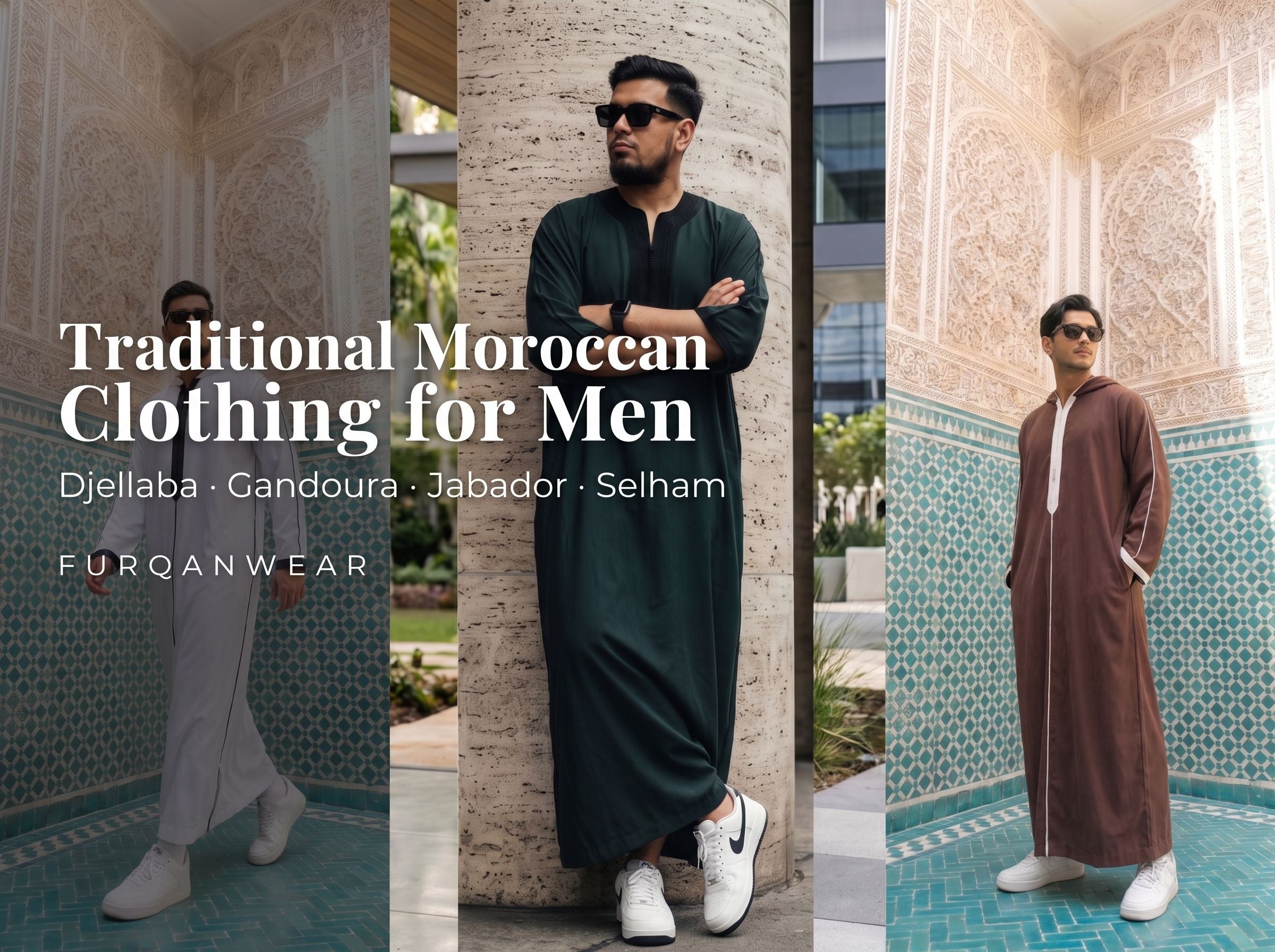
The main traditional Moroccan garments for men are the djellaba, a long robe with a pointed hood; the gandoura, a light tunic without a hood; the jabador, a tunic worn with matching trousers; and the selham or burnous, a long hooded cloak worn on top. The look is finished with saroual trousers, balgha leather slippers and, on formal days, a red tarbouche.
These are not museum pieces. Moroccan men still wear them to Friday prayer, through Ramadan and Eid, at weddings, and at home. Across Canada, the USA and Europe, men from North African families, and many other Muslim men, wear them for the same occasions. This guide explains what each garment is, how to tell them apart, and when each one is worn.
Moroccan Men's Clothing at a Glance
If you only need the quick version, this table covers every garment in this guide.
|
Garment |
What it is |
Hood |
Sleeves |
When it's worn |
|
Djellaba |
Long, loose outer robe worn over everyday clothes |
Yes, pointed (the qob) |
Long |
Every day, Friday prayer, Ramadan, Eid, cold weather |
|
Gandoura |
Light, loose tunic |
No |
Short or none |
Hot weather, at home, casual outings, the mosque |
|
Jabador |
Tunic with matching trousers |
No |
Varies by style |
Weddings, henna night, Eid, family celebrations |
|
Selham / Burnous |
Long wool cloak worn on top |
Yes, pointed |
None (it's a cloak) |
Weddings, religious and national holidays, winter |
|
Caftan |
Long, front-opening tunic, richly decorated |
No |
Usually long |
Weddings and ceremonies |
|
Saroual |
Loose trousers |
— |
— |
Under a gandoura, or as part of a jabador |
|
Balgha |
Heelless leather slippers |
— |
— |
Every day, Eid, weddings |
|
Tarbouche |
Red felt fez |
— |
— |
Formal and ceremonial occasions |
The Djellaba: The Hooded Robe

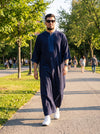
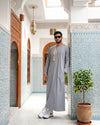
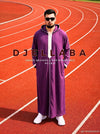
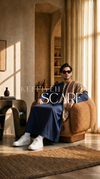
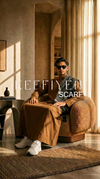
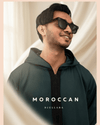
The djellaba is the garment most people picture when they think of Morocco. It is a long, loose outer robe with full-length sleeves and a pointed hood called the qob. It is worn over everyday clothes rather than on its own, which is why it works in so many situations: over a shirt and trousers for errands, over warm layers in winter, or over clean clothes for the mosque.
Traditionally, djellabas were made from wool for the colder months and cotton for summer. The hood is practical as well as recognizable: it keeps off sun, wind and rain, and it rests flat on the back when it isn't needed. The djellaba is worn by both men and women across Morocco and the wider Maghreb, and for men it is the everyday garment, the Friday-prayer garment and often the Eid garment too.
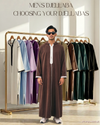
If you'd like the full story of the name, its history and the qob, read our guide to what a djellaba is. Today many djellabas are also made in modern fabrics that resist creases and wash easily. Our own men's djellabas keep the traditional hooded cut in a microfiber blend, in ten colours.
The Gandoura: The Light, Hoodless Tunic

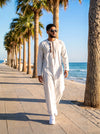
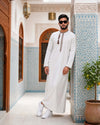
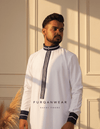
The gandoura is the djellaba's lighter, simpler relative. It is a loose, straight tunic with no hood, worn with short sleeves or no sleeves at all. It is usually made from cotton or linen, and sometimes wool, and it often comes in plain white or with stripes. Length varies by region and style, from below the knee to the ankle.
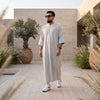
Because it is light and airy, the gandoura is the garment for heat. Moroccan men wear it at home, for casual daytime outings in summer, and to the mosque on hot days. Unlike the djellaba, it is usually worn as the main garment rather than over other clothes. The quickest way to tell them apart is the hood and sleeves: a djellaba has a pointed hood and long sleeves, while a gandoura has neither.
The name can mean slightly different things in different countries. In parts of Algeria, for example, "gandoura" is also used for a women's dress, so context matters.
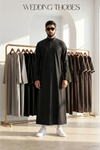
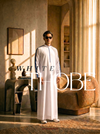
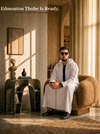
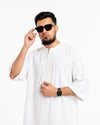
In North America, the gandoura style of a loose, hoodless, half-sleeve robe is often sold as a Moroccan thobe. If you want that lighter summer shape, it's the closest modern equivalent.
The Jabador: Tunic and Trousers for Celebrations
When a Moroccan man dresses up for a family celebration, he very often wears a jabador. It is a two-piece outfit: a tunic with matching trousers cut from the same fabric. Some sets add a matching outer layer for more formal occasions. There is no hood.
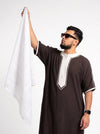
The details are what make a jabador look formal. It usually has a stand (mandarin) collar, and the front opening is finished with braided trim called sfifa and small knotted button loops called akaad. It is cut closer to the body than a djellaba or gandoura, which gives it a neater, more tailored look. Sleeve length varies between styles, from short to long. Everyday jabadors are often made from gabardine, while richer fabrics are used for weddings.
The jabador is the classic choice for weddings, the henna night before a wedding, an aqiqah (the celebration for a newborn), family gatherings, and both Eid al-Fitr and Eid al-Adha. It is traditionally worn with leather balgha slippers. If you're planning an outfit for a nikah or walima, our guide to men's wedding outfits covers the wider picture.
The Selham and Burnous: The Ceremonial Cloak
The burnous is a long cloak of wool with a pointed hood and no sleeves. It is draped over the shoulders and worn on top of a djellaba or jabador. It is traditionally white, beige or dark brown. Plain, heavier wool is typical in the countryside, while fine white wool is kept for formal occasions.
It is one of the oldest garments in North Africa. Its Amazigh (Berber) name is abarnus, and hooded cloaks of this kind go back to ancient Numidia. Today men in Morocco, Algeria and Tunisia wear it for weddings and on religious and national holidays, and some grooms wear one over their wedding outfit.
You will hear two names for it. "Selham" is common in Morocco, while "burnous" is the wider North African name. How each word is used, and small differences in cut, vary from region to region.
A useful way to remember it: the djellaba is a robe you wear, and the selham or burnous is a cloak you wear over it.
Do Moroccan Men Wear the Caftan?
Yes, although it's less common in everyday life. The caftan is a long tunic with a central opening, buttons and rich handmade decoration such as embroidery, beads and sequins. It is traditionally cut from brocade, velvet or silk.
In December 2025, UNESCO added the "Moroccan Caftan: art, traditions and skills" to its list of the Intangible Cultural Heritage of Humanity. UNESCO describes it as a garment "worn by people of all genders and ages" for weddings, baptisms, coming-of-age celebrations and festivals, and recognises the weavers, tailors and artisans who make the fabrics, buttons, braids and embroidery.
Today the caftan is best known as women's celebration wear. At most celebrations, men are more likely to choose a jabador or a fine djellaba. The two are easy to tell apart: a djellaba has a hood and is made for everyday wear, while a caftan has no hood and is made for ceremonies.
Trousers, Shoes and Hats That Complete the Look
Saroual: The Loose Trousers
The saroual is a pair of loose, comfortable trousers. It is worn under a gandoura, and it is the matching lower half of a jabador. It is roomy enough for sitting on the floor at family gatherings and for prayer.
Balgha: The Leather Slippers
Balgha is the Moroccan word for men's heelless leather slippers. You may know them by the French name, babouche. Yellow is the traditional colour for men, and white and brown are also common. The city of Fez is famous for making them. Men wear balgha every day, and especially for Eid, weddings and religious occasions, with a djellaba or jabador.
Tarbouche: The Red Fez
The tarbouche is the brimless red felt hat, often with a tassel, that many people call a fez. The name "fez" comes from the Moroccan city of Fez. Morocco is one of the last places where it is still worn, most visibly in royal court dress and at formal ceremonies. For daily prayer, most men wear a simple skullcap or kufi instead.
What Moroccan Men Wear for Each Occasion
|
Occasion |
What men usually wear |
Good to know |
|
Everyday and at home |
Gandoura in warm weather, a simple djellaba when it's cooler |
Comfort first; saroual and balgha are common at home |
|
Friday prayer (Jumu'ah) |
A clean djellaba, often white or light-coloured, or a gandoura in summer |
Many men add a skullcap or kufi |
|
Ramadan and Eid |
A new or best djellaba for the prayer; a jabador for family visits |
Eid is when men wear their finest pieces |
|
Weddings and henna night |
Jabador or a fine djellaba; a selham on top for the most formal moments |
Grooms often change outfits during the celebration |
|
Winter |
A heavier djellaba, with a selham or burnous on top in the cold |
The hood of both is worn up outdoors |
For Eid specifically, including colours and what to wear for the prayer and family visits, see our guide to choosing a djellaba for Eid.
Traditional Moroccan Clothing Outside Morocco
In Canada, the USA and across Europe, you'll see these garments most at the mosque on Fridays, at Eid prayers and at weddings. The djellaba is the easiest to wear in daily life abroad because it goes over normal clothes. In a North American winter, it sits over warm layers like a light coat, and it comes off at the mosque door just as easily.
Shops outside Morocco don't always use the traditional names. A djellaba is often listed as a "hooded thobe", and the gandoura style is often sold as a "Moroccan thobe". If you're comparing a Gulf-style thobe with a Moroccan djellaba, our djellaba vs thobe guide explains the differences side by side.
Whether you grew up with these garments or are discovering them now, the principle is the same: choose the piece that fits the occasion, and wear it with care. That is what gives traditional Moroccan clothing its dignity.