Skip to content

Islamic History Month in Canada: The Story of Muslims Here Since 1851
- by Mahidur Rehman
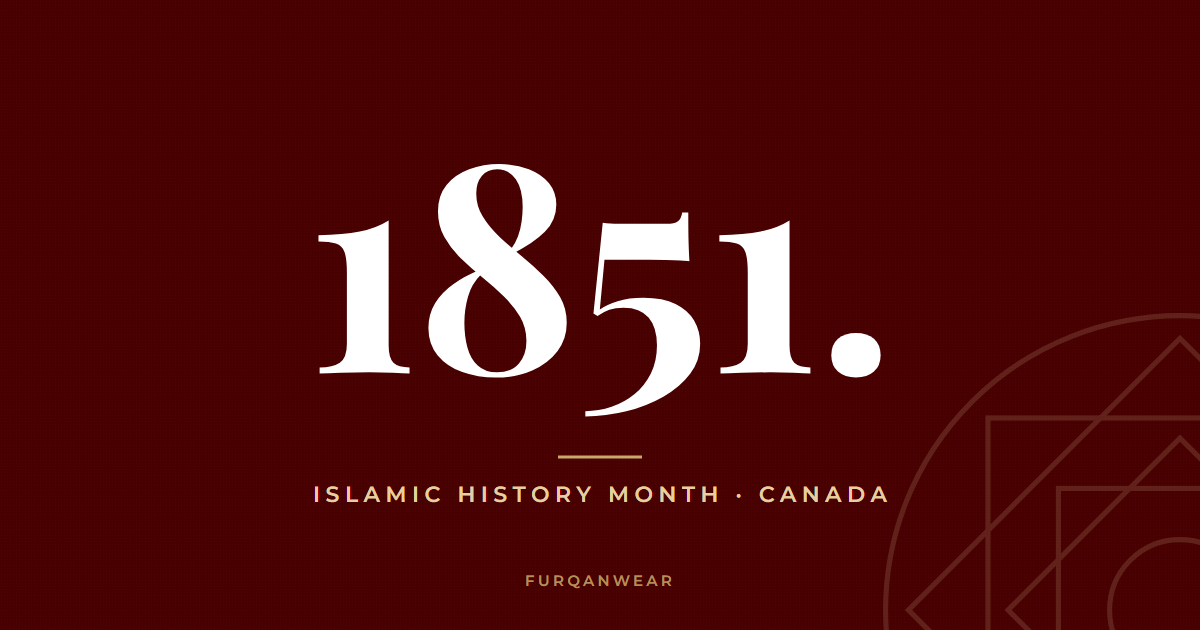
Islamic History Month is observed every October in Canada. In Ontario, it is called Islamic Heritage Month. Canada's House of Commons declared it in 2007 to recognize the history and contributions of Muslims in Canada, a history that begins in 1851, sixteen years before Confederation.
Ask most people when Muslims first came to Canada and they'll guess the 1970s. The real answer is older than the country itself. Here is that story, this year's theme, and simple ways to mark the month with your family, your masjid or your workplace.
Quick facts:
-
When: every October
-
Name in Ontario: Islamic Heritage Month
-
Declared: 2007, by Canada's House of Commons
-
2026 theme: The Art and Legacy of Islamic Calligraphy
-
First recorded Muslims in Canada: 1851
- Muslims in Canada: 1,775,715 in the 2021 census; nearly 2 million in 2026
What is Islamic History Month?
Islamic History Month is a national observance held every October to learn the history of Muslims in Canada and to recognize what Muslim Canadians have given to this country.
It began in 2007, when the House of Commons unanimously adopted a motion from the late Mauril Bélanger, MP for Ottawa–Vanier, to declare October Islamic History Month. Provinces and cities have proclaimed it since, and schools, libraries, museums and mosques hold events throughout the month.
It is not a statutory holiday, and there's no day off. It's a month to learn where we come from and to pass that story on.
Islamic History Month or Islamic Heritage Month?
Both names refer to the same October observance.
Islamic History Month, also called Canadian Islamic History Month, is the national name. It has been used since 2007, including by the organizers, Islamic History Month Canada (IHMC).
Islamic Heritage Month is the name used in Ontario. The Islamic Heritage Month Act, 2016 proclaims every October as Islamic Heritage Month, and Ontario school boards such as the TDSB use that name.
So if your child's school says Islamic Heritage Month and your masjid says Islamic History Month, they mean the same month.
What is the 2026 theme?
The 2026 national theme is "The Art and Legacy of Islamic Calligraphy," chosen by Islamic History Month Canada.
For Muslims, calligraphy was never only decoration. Before printing, scribes copied the Qur'an, works of science and poetry by hand, and the beauty of the writing was a way of honouring the words. That is why calligraphy covers mosque walls and old manuscripts, and why it appears on coins, buildings and, today, clothing.

Three scripts you will see most often:
-
Kufic: angular and bold, used in early copies of the Qur’an and on early Islamic coins.
-
Naskh: rounded and easy to read, the style most printed Qur’ans use today.
-
Nasta’liq: sloping and elegant, developed in Persia and widely used for Urdu.
You will also see Thuluth, with tall, flowing letters used for large inscriptions on mosques, and Diwani, a tightly woven, decorative style developed at the Ottoman court.
When did Muslims first come to Canada?
The first recorded Muslims in Canada arrived in 1851, sixteen years before Confederation.
They were James and Agnes Love, a young couple from Scotland who had embraced Islam and settled in southern Ontario. Their son, James Love Jr., was born in 1854 and is often recorded as the first Muslim born in Canada.
When Canada took its census in 1871, it counted 13 Muslims. Thirteen people, in a country still being built. They left no mosque and few records, but they were here first.
How was Canada's first mosque built?
Canada's first mosque, the Al Rashid Mosque, opened in Edmonton on December 12, 1938. A group of Muslim women led by Hilwie Hamdon made it happen.
At the time, there were very few Muslims in Canada: the 1931 census counted 645. Hilwie Hamdon, a mother of six born in what is now Lebanon, asked Edmonton's mayor, John Fry, for land for a mosque. The community still had to raise $5,000 to build it, in the middle of the Great Depression.

They raised it. Muslim families across Alberta and Saskatchewan gave what they could, and Hilwie went door to door to businesses on Jasper Avenue. Neighbours of other faiths and downtown businesses gave too.
The building was moved twice. Since 1992 it has stood at Fort Edmonton Park, where you can still visit it. In 2017, Hilwie Hamdon School opened in Edmonton, named in her honour. Nobody handed it to them. They built it.

Photo: reneaube, CC BY 2.0, via Wikimedia Commons.
How many Muslims live in Canada today?
Statistics Canada's 2021 census counted 1,775,715 Muslims in Canada, 4.9% of the population, up from 2.0% in 2001. In October 2026, the federal government put the number at nearly 2 million, with roots in more than 50 countries.
More than half live in Ontario (942,990 in 2021). Ontario, Quebec and Alberta have the largest shares of Muslims among the provinces. The community is young: the median age is 30, compared with 41.2 for all Canadians, and about 3 in 10 Muslims in Canada were born here.
Along the way came a line of firsts. Larry Shaben became Canada's first Muslim cabinet minister in 1979, in Alberta's government. Edward Saddy, who served on the board of the Al Rashid Mosque, became Canada's first Muslim judge.
Timeline: Muslims in Canada at a glance
|
Year |
What happened |
|
1851 |
James and Agnes Love, the first recorded Muslims in Canada, settle in southern Ontario |
|
1854 |
James Love Jr. is born, often recorded as the first Muslim born in Canada |
|
1871 |
Canada's census counts 13 Muslims |
|
1931 |
The census counts 645 Muslims |
|
1938 |
The Al Rashid Mosque, Canada's first mosque, opens in Edmonton |
|
1979 |
Larry Shaben becomes Canada's first Muslim cabinet minister, in Alberta |
|
1992 |
The Al Rashid Mosque reopens at Fort Edmonton Park |
|
2001 |
Muslims are 2.0% of Canada's population |
|
2007 |
The House of Commons declares October Islamic History Month |
|
2016 |
Ontario passes the Islamic Heritage Month Act |
|
2021 |
The census counts 1,775,715 Muslims, 4.9% of Canadians |
|
2026 |
The national theme is "The Art and Legacy of Islamic Calligraphy" |
The history behind our history
Muslims in Canada are part of a much older story of faith and learning. Four names worth knowing:
-
Al-Khwarizmi (9th century): his book on al-jabr gave us the word algebra, and the word algorithm comes from his name.
-
Fatima al-Fihri (9th century): in 859 she founded al-Qarawiyyin in Fez, Morocco, widely recognized as the oldest university still operating.
-
Ibn al-Haytham (10th to 11th century): he showed that we see because light enters the eye, and insisted that every idea be tested by experiment.
-
Ibn Sina (10th to 11th century): his Canon of Medicine was a standard medical textbook for centuries.
None of them set out to make history. They served Allah through their work, with excellence, and history followed.
History you wear
History isn't only in books and museums. It's in how we pray, how we speak, how we carry ourselves and what we put on in the morning.
The Prophet ﷺ taught us to dress with dignity: covered, clean, at our best and without arrogance. Read more in our guide to the Sunnah of dress for men.
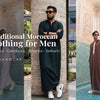
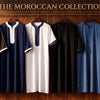
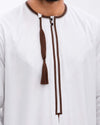
For many brothers, that dignity looks like a thobe: a garment Muslim men across the Arab world and beyond have worn for generations, and still wear to Jumu'ah, Eid and family gatherings. Every time you put one on, you carry a little of that history with you. Explore our men's thobes.
How to mark Islamic History Month: ideas and activities
You don't need a big event to mark it. Pick one or two.
With your family
-
Learn one story from this page and tell it at dinner. Start with Hilwie Hamdon.
-
Ask your parents or grandparents how they came to Canada, and write it down before it's lost.
-
Visit a calligraphy exhibit, workshop or library event, or write your names in Arabic together.
- Read a book by a Muslim author with your kids. Many public libraries share a reading list in October.
At your masjid, school or workplace
-
Hold or attend a masjid open house, and invite a neighbour or a coworker.
-
Share this timeline with your child's class or your team at work.
- Support a Muslim-led project in your city. The next Al Rashid starts with someone who asks.
The next chapter
Thirteen people in 1871. One mosque built during the Great Depression. Nearly 2 million Muslims today.
Every generation built something for the one after it. This month asks one question: what will you build?
At Furqanwear, we make clothing that keeps you connected to the Eternal and lets you wear your faith with honour, every day.
Sources
-
Islamic History Month Canada
-
Government of Canada: Statement on Canadian Islamic History Month (October 2026)
-
Government of Ontario: Islamic Heritage Month Act, 2016
-
Statistics Canada: The Muslim population in Canada
-
University of Calgary: Timeline of Muslims in Canada
-
The Canadian Encyclopedia: Al Rashid Mosque